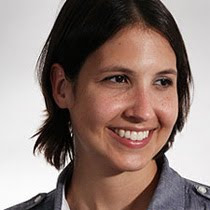
Phil and I went up to Hopkins again today. Our first appointment was with Dr. T, the neurosurgeon. He had obviously done a lot of these surgeries as he had his whole conversation perfected. He briefly went through the treatment options and then discussed the retrosigmoid surgical procedure and its risks; Dr. T was able to give percentages specific to my case for my risk of hearing loss, facial paralysis, and headaches. Overall, Dr. T felt that I should make a pretty full recovery, and we felt good about Dr. T's knowledge and experience.
Afterward, I went to the audiology department to have an audiogram performed. I would get the results at my appointment later that day with Dr. C. Then I took part in a study that Dr. C was heading and went out to lunch with Phil and a friend from college. I was also able to speak with Dr. T's secretary to schedule the surgery for Feb. 9.
At the meeting with Dr. C, we went over some questions I had and the audiogram. It showed that I have a 30-40% loss of hearing in my left ear with 80% word recognition. This means that I can both hear reasonably well and understand speech very well. We all agreed that it would be in my best interest to try to save some of this hearing. Even if I end up with only a little hearing left, it will help with directionality and knowing where sound comes from. I signed the surgical consent forms, and then the appointment was done.
We went home feeling very good about things and looking forward to getting the surgery over with.
(In the interest of full disclosure, this post was actually written on 2/1/09.)
Showing posts with label decisions. Show all posts
Showing posts with label decisions. Show all posts
Wednesday, December 17, 2008

Monday, December 15, 2008
Is the glass half full or half empty?
I got the radiologist's report for the MRI from last week.
"Again noted is an enhancing mass lesion in the left cerebellopontine angle. The majority of this lesion is in the cerebellopontine angle, but with a component protruding into the internal auditory canal. The extracanalicular portion of the mass has increased in all three dimensions when compared with the previous study measuring 1.4 AP x 1.3 RL x 1.6 cm SI (previously 1.3 AP x 0.9 RL x 1.3 cm SI)."
In layman's terms: I still have a tumor. It's grown since the last scan taken four months earlier.
As nice as it would have been for it to not have grown, I was also glad to see it grow because it confirmed that I should go ahead and have surgery now instead of waiting longer.
(In the interest of full disclosure, this post was actually written on 1/30/09.)
"Again noted is an enhancing mass lesion in the left cerebellopontine angle. The majority of this lesion is in the cerebellopontine angle, but with a component protruding into the internal auditory canal. The extracanalicular portion of the mass has increased in all three dimensions when compared with the previous study measuring 1.4 AP x 1.3 RL x 1.6 cm SI (previously 1.3 AP x 0.9 RL x 1.3 cm SI)."
In layman's terms: I still have a tumor. It's grown since the last scan taken four months earlier.
As nice as it would have been for it to not have grown, I was also glad to see it grow because it confirmed that I should go ahead and have surgery now instead of waiting longer.
(In the interest of full disclosure, this post was actually written on 1/30/09.)
Wednesday, December 10, 2008
Brain MRI, Take 2
I had my second brain MRI today. It was pretty much the same as the first one except I had a different tech. Also, during the scan, I was thinking about whether or not my tumor grew instead of wondering why I was wasting my time having it done.
(In the interest of full disclosure, this post was actually written on 1/30/09.)
(In the interest of full disclosure, this post was actually written on 1/30/09.)
Tuesday, November 25, 2008
Baltimore, here I come
Phil and I went up to Johns Hopkins for the first time today. Dr. C, a neuro-otolaryngologist I found through a search on the discussion forum, was willing to see me on his off-day, only a few days after I initially called to make an appointment.
Our first impression was that even though the hospital isn't in the greatest part of town, the facility itself seems really good. The security at the entrances is reassuring, and the staff is very friendly and helpful. After we headed up to the appropriate floor, we found that the patient intake system is organized with a numbered ticket dispenser, which allows for patient confidentiality as well as creates confidence among the patients that they aren't being forgotten.
The appointment with Dr. C went well. We met first with a younger resident-type guy who took my history and cleaned a glob of wax out of my left ear. Then Dr. C came in and went over the treatment options (watch & wait, surgery, and radiation), focusing on the retrosigmoid surgical procedure. He said that, at Hopkins, they're excellent at retrosigmoid, good at translab, and they don't do middle fossa, and he talked to us about what to expect post-surgery in terms of headaches, loss of balance, and general recovery.
Dr. C also did a thorough examination of my current state of balance by asking me to do some marching in place with my arms extended and my eyes closed, and he checked my vestibular function by turning my head quickly and seeing if my eyes were able to stay focused on his nose. I was able to pass these tests, meaning that my balance nerve was still working and that I may have a harder time after surgery since my other vestibular nerve hasn't done a lot of compensating already.
At the end of the appointment, Dr. C said that I should make an appointment with Dr. T, the neurosurgeon, and schedule a new audiogram. He also gave me the surgical consent forms to look over and bring back next time I saw him if I wanted to have surgery there.
Overall, our impressions of Johns Hopkins and Dr. C were extremely positive, and we left there smiling and feeling very confident that these doctors would take good care of me.
(In the interest of full disclosure, this post was actually written on 1/30/09.)
Our first impression was that even though the hospital isn't in the greatest part of town, the facility itself seems really good. The security at the entrances is reassuring, and the staff is very friendly and helpful. After we headed up to the appropriate floor, we found that the patient intake system is organized with a numbered ticket dispenser, which allows for patient confidentiality as well as creates confidence among the patients that they aren't being forgotten.
The appointment with Dr. C went well. We met first with a younger resident-type guy who took my history and cleaned a glob of wax out of my left ear. Then Dr. C came in and went over the treatment options (watch & wait, surgery, and radiation), focusing on the retrosigmoid surgical procedure. He said that, at Hopkins, they're excellent at retrosigmoid, good at translab, and they don't do middle fossa, and he talked to us about what to expect post-surgery in terms of headaches, loss of balance, and general recovery.
Dr. C also did a thorough examination of my current state of balance by asking me to do some marching in place with my arms extended and my eyes closed, and he checked my vestibular function by turning my head quickly and seeing if my eyes were able to stay focused on his nose. I was able to pass these tests, meaning that my balance nerve was still working and that I may have a harder time after surgery since my other vestibular nerve hasn't done a lot of compensating already.
At the end of the appointment, Dr. C said that I should make an appointment with Dr. T, the neurosurgeon, and schedule a new audiogram. He also gave me the surgical consent forms to look over and bring back next time I saw him if I wanted to have surgery there.
Overall, our impressions of Johns Hopkins and Dr. C were extremely positive, and we left there smiling and feeling very confident that these doctors would take good care of me.
(In the interest of full disclosure, this post was actually written on 1/30/09.)
Tuesday, November 18, 2008
Need more advice
I had been thinking about Georgetown vs. House for a week when I decided to ask the folks on the forum for advice. They agreed with my inclination to get another opinion at Johns Hopkins and shared with me their stories of how they decided on treatment. It was very helpful to hear from everybody and gave me confidence to keep researching.
(In the interest of full disclosure, this post was actually written on 1/30/09.)
(In the interest of full disclosure, this post was actually written on 1/30/09.)
Thursday, November 13, 2008
Hello again
I met with Dr. J at Georgetown again. I explained to him what the House docs told me and said that I was thinking about doing translab instead of retrosigmoid. He seemed disappointed but said that if that was what I wanted, he could do it. Then I asked him a couple of questions about things I read related to what you can and cannot do after surgery. At the end of the appointment, he gave me the name of his surgical coordinator and told me to schedule as soon as possible since he was booking up pretty far in advance.
(In the interest of full disclosure, this post was actually written on 1/30/09.)
(In the interest of full disclosure, this post was actually written on 1/30/09.)
Thursday, November 6, 2008
I'm in the driver's seat
Dr. S, the neurosurgeon from the House Clinic, called me at work today. Here are his thoughts:
I was considering going out to the House Clinic in Los Angeles at this point, but I wanted to hear what Dr. J said locally before I made any commitments one way or the other.
(In the interest of full disclosure, this post was actually written on 1/30/09.)
- Since I am 26, it must be treated; no watch and wait. He would be reluctant to do radiation on a young person, but it could be done. His recommendation would be surgery.
- He felt that the shape of the tumor looks unfavorable for saving the hearing.
- In terms of his recommended approach, he felt that the tumor was slightly too large to attempt middle fossa, as it would increase the risk to the facial nerve. He wouldn't do retrosigmoid either because it would be difficult to get it all out of the IAC. He thought that translab would be the best way to get it all, but that I might want to wait until we established that it was actually growing.
- He thought that I should get an MRI every three months until we see growth compared to the first MRI.
- His suggestions for reasonable "next steps" were: 1) wait for growth, then do translab, 2) do translab now, and 3) do retrosigmoid now.
I was considering going out to the House Clinic in Los Angeles at this point, but I wanted to hear what Dr. J said locally before I made any commitments one way or the other.
(In the interest of full disclosure, this post was actually written on 1/30/09.)
Sunday, October 26, 2008
Nice to meet you
I finally posted for the first time today on the ANA discussion forum. I wanted to introduce myself and ask for advice about talking to doctors.
(In the interest of full disclosure, this post was actually written on 1/30/09.)
(In the interest of full disclosure, this post was actually written on 1/30/09.)
Saturday, October 11, 2008
Still amazed at the follow-through
Dr. F gave me another call today to let me know that he had consulted with Dr. S. He asked me which way I was leaning - translab, where I would definitely lose the hearing, or middle fossa, which would allow for a chance of saving the hearing. I said middle fossa, which seemed to surprise Dr. F, who then stressed the fact that I would most likely lose my hearing either way and that translab was their recommendation. He also reiterated that "radiation therapy is not for [me]."
He went on to more fully explain the BAHA (bone-anchored hearing aid) device, and how that it does a good job allowing people to "hear" on both sides. The BAHA consists of a titanium implant that is screwed into the bone behind the ear and a processor that snaps onto the part of the implant that sticks out of the skin. The processor picks up the sounds from that side of the head and transfers the vibrations to the skull where they are "heard" by the other ear. Dr. F said that 25% of the patients with single-sided deafness (SSD) at House get a BAHA and that 90% of those people are happy with the device.
Dr. F told me to expect a call from Dr. S and said that he would have his surgical coordinator give me a call as well to discuss scheduling surgery and insurance coverage. He also gave me his cell phone number and said to call him if I had any other questions.
(In the interest of full disclosure, this post was actually written on 1/29/09.)
He went on to more fully explain the BAHA (bone-anchored hearing aid) device, and how that it does a good job allowing people to "hear" on both sides. The BAHA consists of a titanium implant that is screwed into the bone behind the ear and a processor that snaps onto the part of the implant that sticks out of the skin. The processor picks up the sounds from that side of the head and transfers the vibrations to the skull where they are "heard" by the other ear. Dr. F said that 25% of the patients with single-sided deafness (SSD) at House get a BAHA and that 90% of those people are happy with the device.
Dr. F told me to expect a call from Dr. S and said that he would have his surgical coordinator give me a call as well to discuss scheduling surgery and insurance coverage. He also gave me his cell phone number and said to call him if I had any other questions.
(In the interest of full disclosure, this post was actually written on 1/29/09.)
Friday, October 10, 2008
Another interesting appointment
I saw Dr. G, the radiation oncologist, today. He explained the three options to me again (watch & wait, surgery, radiation) and briefly described the CyberKnife fractionated treatment. Basically, the goal of CK is to split up the total amount of radiation into several sessions so that the tumor gets the combined strength of radiation but the surrounding tissues get a much smaller accumulated dose. The rate of hearing preservation with CyberKnife is higher than with Gamma Knife for this reason.
GK is usually a single session of radiation directed at the tumor, and to ensure the patient doesn't move, a metal head frame is screwed into the patient's skull. CK uses a fitted mask to maintain an approximate continuity between sessions, but the machine also has an on-board CT scanner that scans the location of the patient's head during the procedure so the robotic arm can adjust if a slight recalculation needs to be made.
I didn't really feel that I learned any more about the CK option than I already knew from reading the discussion forum posts. The main thing I took away from this meeting was what Dr. G said toward the end of the appointment, which was that his recommendation for me, based on my age and the lack of long-term studies on the effects of radiation, would be to have surgery. He said that he wouldn't NOT do radiation treatment if that's what I wanted, but that it wouldn't be his preferred choice.
The thing that AN patients run into a lot of the time is a lack of unbiased sources for information. Surgeons generally want to cut, and radio-oncologists want to zap. I was surprised to hear that Dr. G, being a radiation oncologist, thought I should have microsurgery. That was when I decided for good that I needed to be focusing on surgical options.
(In the interest of full disclosure, this post was actually written on 1/29/09.)
GK is usually a single session of radiation directed at the tumor, and to ensure the patient doesn't move, a metal head frame is screwed into the patient's skull. CK uses a fitted mask to maintain an approximate continuity between sessions, but the machine also has an on-board CT scanner that scans the location of the patient's head during the procedure so the robotic arm can adjust if a slight recalculation needs to be made.
I didn't really feel that I learned any more about the CK option than I already knew from reading the discussion forum posts. The main thing I took away from this meeting was what Dr. G said toward the end of the appointment, which was that his recommendation for me, based on my age and the lack of long-term studies on the effects of radiation, would be to have surgery. He said that he wouldn't NOT do radiation treatment if that's what I wanted, but that it wouldn't be his preferred choice.
The thing that AN patients run into a lot of the time is a lack of unbiased sources for information. Surgeons generally want to cut, and radio-oncologists want to zap. I was surprised to hear that Dr. G, being a radiation oncologist, thought I should have microsurgery. That was when I decided for good that I needed to be focusing on surgical options.
(In the interest of full disclosure, this post was actually written on 1/29/09.)
Wednesday, October 8, 2008
Exceptional customer service
Dr. F, a neuro-otolaryngologist (ENT) from the House Ear Clinic, called me today. We had a pretty long conversation, around an hour or so. These are some notes from that discussion.
(In the interest of full disclosure, this post was actually written on 1/29/09.)
- Surgery is the best option for a 26-year-old; he would definitely not watch-and-wait or have radiation.
- My hearing nerve is crushed and unresponsive.
- In his opinion, the tumor is slightly too big to preserve hearing.
- The goals of surgery, in order of importance, are 1) save the life, 2) remove all of the tumor, 3) preserve the facial nerve, and 4) save the hearing.
- The retrosigmoid approach is very complicated and would not be a good option for my situation because it would be difficult to remove all of the tumor in the internal auditory canal (IAC).
- He would recommend either translab or the middle fossa approach but thinks translab would be best because the tumor is slightly too big for middle fossa, plus the hearing nerve probably isn't worth trying to save and there would be an increased risk to the facial nerve.
(In the interest of full disclosure, this post was actually written on 1/29/09.)
Thursday, October 2, 2008
It vanished
Somehow, my FedEx to the House Ear Clinic disappeared. I put it in the drop box and forgot about it. I realized that I hadn't heard from House, so I went to track the package, but there was no information available. I called FedEx, and they sent a driver to check the box for my envelope. It wasn't there. I stopped by the box later that day and checked for myself. No luck. So I prepared another CD and letter to send out the next day.
(In the interest of full disclosure, this post was actually written on 1/29/09.)
(In the interest of full disclosure, this post was actually written on 1/29/09.)
Monday, September 29, 2008
That wasn't what I expected to hear
I went to see Dr. K today. He was disappointed at the results of my ABR test and said that it was unresponsive, indicating that my hearing may not be able to be preserved. What I didn't understand was, if that was the case, why could I still hear fine out of that ear? He looked over my spinal MRI films and said that there were no incidences of additional tumors, so I probably don't have NF2. In order to completely rule it out though, I would need to have genetic testing done, but since I have no family history of it, he felt it would be unnecessary to do that.
After we went over those things, I asked about the CyberKnife, which seemed to catch him off-guard. He started looking very uncomfortable and suggested that I see the radiation oncologist to ask about that specifically. He gave me the name of the doctor, and then basically the appointment was done. I felt like I had done something wrong, but I was just trying to get all of the facts.
(In the interest of full disclosure, this post was actually written on 1/29/09.)
After we went over those things, I asked about the CyberKnife, which seemed to catch him off-guard. He started looking very uncomfortable and suggested that I see the radiation oncologist to ask about that specifically. He gave me the name of the doctor, and then basically the appointment was done. I felt like I had done something wrong, but I was just trying to get all of the facts.
(In the interest of full disclosure, this post was actually written on 1/29/09.)
Monday, September 22, 2008
Seeking the best
I decided to go ahead and send a CD of my MRI to the House Ear Clinic in Los Angeles. They offer a free consultation, so I didn't think it would hurt to get another opinion about what's going on in my head.
(In the interest of full disclosure, this post was actually written on 1/29/09.)
(In the interest of full disclosure, this post was actually written on 1/29/09.)
Saturday, September 20, 2008
I thought this condition was rare!
I went to the D.C.-area ANA support group meeting today. Our speaker was a doctor from a hospital in Virginia who runs a CyberKnife machine. He told us about the history of radiosurgery, from the early days of single-session Gamma Knife to the current way of using fractionated therapy with the CyberKnife. There were around 25-30 people in attendance at the meeting, many of whom had surgery throughout the years. Some people had radiation as well. A few people were watch & waiters, and a few others were like me who planned to do something in the near future but were still deciding the what and who.
One of the main things I got out the meeting was that radiation seemed like a viable alternative to surgery, and that if I had radiation first, I might be able to "buy some time" before I needed to have riskier surgery. The surgeons I had spoken with so far didn't offer radiation as a choice to me nor offer a thorough explanation of why. The other thing I learned was that the House Ear Clinic in LA is really on top of things in the AN world and that it would be worth contacting them for more info.
(In the interest of full disclosure, this post was actually written on 1/29/09.)
One of the main things I got out the meeting was that radiation seemed like a viable alternative to surgery, and that if I had radiation first, I might be able to "buy some time" before I needed to have riskier surgery. The surgeons I had spoken with so far didn't offer radiation as a choice to me nor offer a thorough explanation of why. The other thing I learned was that the House Ear Clinic in LA is really on top of things in the AN world and that it would be worth contacting them for more info.
(In the interest of full disclosure, this post was actually written on 1/29/09.)
Monday, September 8, 2008
Getting the run-around
I had been trying to set up another appointment with Dr. K, but his receptionists kept telling me that he's on vacation. I left a message and then followed up later when they said he would be back in the office, but they told me that he's still not back. The problem was that he had no appointment openings until later in October, but I didn't want to wait that long to see him again. The staff had to check with him before they could set up a double-booking. Eventually I emailed Dr. J to see if he could help things along, which ended up working. I'll be seeing Dr. K again on Sept. 29, which is awhile from now, but I guess I have no choice. Meanwhile, I'll keep doing more research.
(In the interest of full disclosure, this post was actually written on 1/29/09.)
(In the interest of full disclosure, this post was actually written on 1/29/09.)
Tuesday, September 2, 2008
Thank you, Internet!
I found out about the Acoustic Neuroma Association and requested an information packet from them. Looks like there is a D.C. support group meeting later this month. I also started reading the ANA discussion forums and am finding it very helpful to hear from people who have been through this. I'm learning a lot but I'm too nervous to actually post yet.
http://www.anausa.org/
(In the interest of full disclosure, this post was actually written on 1/29/09.)
http://www.anausa.org/
(In the interest of full disclosure, this post was actually written on 1/29/09.)
Wednesday, August 27, 2008
Hey...it's not brain surgery
People are always comparing the difficulty of things to brain surgery. You ask someone how to do something and they reply with "it's not brain surgery." Well, today was my first encounter with an actual brain surgeon, and he didn't seem to think that his job was as hard as everyone makes it out to be.
Dr. J was young, somewhat surprisingly young. He seemed very competent though as he explained the retrosigmoid procedure to us. The surgeons drill a hole in the skull behind the ear, retract the brain, and excise the tumor. This procedure leaves a chance for hearing preservation, unlike the other main AN-removal technique known as translabyrinthine. In the translab procedure, the surgeons drill through the inner ear canal, destroying the hearing mechanisms, to get to the location of the tumor.
As Dr. J was talking and demonstrating the location on a skull, I took notice of his hands. They were kind of dry but also very steady. That seemed like a good sign to me. He also seemed very confident, but I never got a specific number of how many of these he had performed. Dr. K had said that they do essentially one per week, but I wasn't sure if that was just the two of them or if that figure included other skull base tumor doctors at the hospital.
Phil and I left that appointment feeling pretty good about the doctors we had met at Georgetown.
(In the interest of full disclosure, this post was actually written on 1/28/09.)
Dr. J was young, somewhat surprisingly young. He seemed very competent though as he explained the retrosigmoid procedure to us. The surgeons drill a hole in the skull behind the ear, retract the brain, and excise the tumor. This procedure leaves a chance for hearing preservation, unlike the other main AN-removal technique known as translabyrinthine. In the translab procedure, the surgeons drill through the inner ear canal, destroying the hearing mechanisms, to get to the location of the tumor.
As Dr. J was talking and demonstrating the location on a skull, I took notice of his hands. They were kind of dry but also very steady. That seemed like a good sign to me. He also seemed very confident, but I never got a specific number of how many of these he had performed. Dr. K had said that they do essentially one per week, but I wasn't sure if that was just the two of them or if that figure included other skull base tumor doctors at the hospital.
Phil and I left that appointment feeling pretty good about the doctors we had met at Georgetown.
(In the interest of full disclosure, this post was actually written on 1/28/09.)
Wednesday, August 20, 2008
Three hours in a machine!
I found out that a full spinal MRI takes about three hours, and they do it in parts over two days so you don't go crazy. It wasn't that bad, but the brain MRI is quicker and more enjoyable. Also, you can't use your insulin pump when you're in the MRI screening room (metal objects...huge magnets...not a good combination), so being disconnected from insulin for over an hour didn't do great things to my blood sugar.
(In the interest of full disclosure, this post was actually written on 1/28/09.)
(In the interest of full disclosure, this post was actually written on 1/28/09.)
Monday, August 11, 2008
ABR is easier than MRI
The ABR test is a cinch. All you have to do is sit very still in a recliner while the techs put some electrodes on your forehead. You're not allowed to fall asleep, but other than that, it requires no real effort.
The audiologist said that "the test results were consistent with my diagnosis." I wasn't really sure what to make of that.
(In the interest of full disclosure, this post was actually written on 1/28/09.)
The audiologist said that "the test results were consistent with my diagnosis." I wasn't really sure what to make of that.
(In the interest of full disclosure, this post was actually written on 1/28/09.)
Subscribe to:
Posts (Atom)